

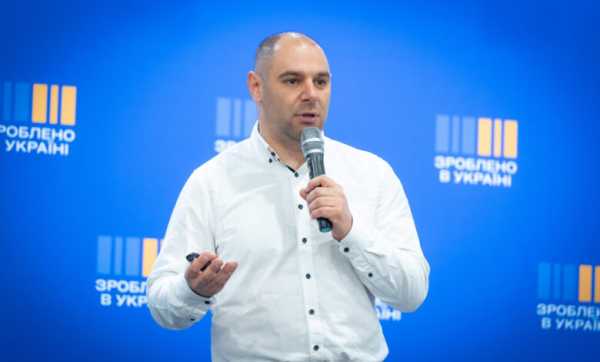
A conversation with Dmytro Kisilevskyi about industrial policy, industrial parks, and value-added economy
The share of manufacturing in the Ukrainian economy today is only 8.5%. For comparison, in OECD countries (Organisation for Economic Co-operation and Development), a level of around 20% is considered normal. It is in this difference (between what exists and what could be) that the key economic intrigue for agrarian Ukraine is currently being formed.
During the war, the agricultural sector began to rapidly change its development logic. Alongside grain, biodiesel and bioethanol, deep processing of soybeans and rapeseed, industrial hemp, and pea-based bio-adhesives are emerging. New production chains are growing around these projects, and industrial parks are transforming from a “paper” instrument into real launch points for factories and investment attraction.
We speak with Dmytro Kisilevskyi, Deputy Chairman of the Verkhovna Rada Committee on Economic Development and Policy Coordinator of “Made in Ukraine,” about why processing has become a pragmatic response to logistical risks, how the state measures the effectiveness of industrial policy, which tools work for small businesses and large investors, and why industrial parks are playing a key role in the transformation of the agrarian economy today.
Mr. Dmytro, if we talk about “Made in Ukraine” as a policy with clear KPIs: how do you assess what has already been done, what is planned for the coming year, and by what parameters do you personally define the effectiveness of this program? What expectations do you have for it, and what are the main obstacles on the path to these results?
“Made in Ukraine” is a policy for the development of Ukrainian producers. Its goal is simple: to create conditions under which it will be profitable to produce in Ukraine, profitable to invest in production, and profitable to export goods with higher added value. That is, we must gradually move away from a raw material model and become a more complex, more technological economy.
This explains the structure of the programs included in “Made in Ukraine.” There are tools aimed at developing domestic production, tools for stimulating investment, and programs that encourage non-raw material exports. But if we talk about the main, fundamental indicator, then for me, it is the structure of the economy.
As of 2025, the share of manufacturing in the economic structure was at the level of 8.5%. The OECD is a “club of wealthy countries,” considering 20% to be a normal level, and in their understanding, a normal economy is one where manufacturing accounts for one-fifth. In 2021, we were around 10%; in the first year of the full-scale invasion, we dropped to 7.5%, and now we have recovered to 8.5%. But this is still very far from what is considered normal.
Therefore, to be honest, this goal cannot be achieved in a year or two. But in the perspective of 10, perhaps 15 years, it seems realistic to me. Ukraine has the grounds for this.
At the same time, in the short term, on an annual basis, there are also things that can be measured. For 2025, the contribution of programs included in “Made in Ukraine” to economic growth is estimated at 0.95 percentage points out of the total GDP growth of 2.2%, according to the Ministry of Economy’s estimates. That is, these programs actually ensured about one percent of growth.
We can also look through taxes. In 2025, manufacturing has the highest tax contribution to the consolidated budget, slightly less than 18%. And at the same time, it shows the largest year-on-year growth in absolute terms among all sectors of the economy: for 2025, this is an increase of UAH 70.2 billion in taxes compared to the previous year. Thus, even in the short, “one-year” planning horizon, we see an important economic effect. And strategically, we are moving towards increasing the complexity of the economy, and this will be directly reflected in the share of manufacturing.
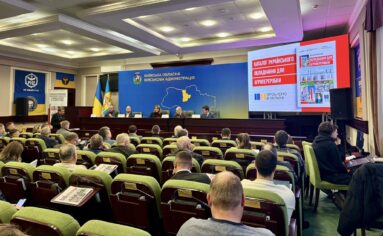
Recently, we spoke with the owner of an agricultural holding about the emergence of a large number of new processing projects during the war: biodiesel, bioethanol, starch, and other technological areas. But the country is in a difficult situation, resources are limited, people are scarce, and the planning horizon is short. In your opinion, what motivates businesses today to invest in such complex projects, and in such numbers?
I think several things are happening simultaneously here. First is the feeling of risk of losing the harvest. The risk that exports may be blocked or significantly complicated. We have already seen that raw material logistics are being blocked from various sides and with various motivations. Russians do it at sea, and our western neighbors periodically create problems on land, in road and rail transport.
When a person involved in the agricultural sector sees someone dumping grain on the ground, it causes righteous anger. You grew it, you harvested it under shelling, you transported it, you solved a bunch of problems, and then someone decides that it can be spoiled or destroyed. And when businesses understand that our path to the European Union will be accompanied by such situations more than once, they start looking for ways to reduce risks.
Processing in this sense is a very pragmatic response. Firstly, it is an opportunity to preserve the harvest, as you have not one, but two implementation options. You can sell raw materials if exports are working, but there is also the option to sell processed products. Secondly, it is a higher value in a smaller volume. Such products are easier to export, and there are usually fewer problems with logistics and blockages.
The second reason, in my opinion, is a certain maturity of business in the agricultural sector. The “sow, harvest, sell” model works in a short cycle. Processing requires longer planning, larger investments, and different management discipline. But for many entrepreneurs, it is also a professional interest, a desire to complicate their business, to build something more than a single season.
I see a large category of entrepreneurs in Ukraine who strive for more. They are expanding the spheres in which they operate. Some are moving from crop production to animal husbandry, as these are subsequent stages after grain, and feed can be produced, and the economy can be built around this. Some go into gardening. Some invest in processing. And it seems to me that a significant portion of agro-entrepreneurs will, in one way or another, complicate their investment portfolios, because the added value and complexity of agricultural business, in the right sense, will continue to grow.
Speaking of specifics, which segments of the agricultural sector, in your opinion, have the greatest potential for transitioning to processing and creating added value today? What project examples have you seen or accompanied over the past year, and which of them appear most illustrative?
There is a classic, already textbook example that is well known to everyone: the story of the establishment of the oil extraction industry in Ukraine. In the late 90s and early 2000s, duties were imposed, and traders and farmers had many doubts. But at a certain point, they started building factories, and as a result, Ukraine transformed from the world’s largest sunflower seed exporter to the largest sunflower oil exporter.
This is a very illustrative story. It turned out that we know how to build factories, we have enough engineers, and this business is profitable. Everyone benefited. Farmers who grow the crop. Farmers who built their own processing. Those who gained the opportunity to either sell products abroad or sell them domestically. And, importantly, the state benefited.
Last year, we essentially tried to repeat this path for soybeans and rapeseed. One can argue about how correct it was to do this within a single season; perhaps it would have been more logical to plan such changes with a focus on the next year so that farmers could adjust their sowing plans. But, despite this, in terms of processing volumes, the effect was almost immediate.
Already in September, we saw an increase in soybean and rapeseed processing. We had available capacities that were not fully utilized before. Thanks to these decisions, they started working, and the state received additional revenue.
We estimated that the additional revenue to the budget from this initiative is about UAH 9 billion annually. This is money that goes to finance defense, as all taxes collected within the country are directed there.
According to industry associations, there are currently about 3 million tons of processing capacity under construction, specifically for oilseeds. This means that demand for soybeans and rapeseed will be stable and predictable. Farmers can already plan their sowings, understanding that these rules of the game will continue to apply.
I am convinced that with such a volume of capacity, demand will be sufficient to ensure a profitable business for those who grow, those who process, and those who export finished products. I often remind in such discussions that Russians have learned to supply soybean and rapeseed processing products to the European Union, while we have supplied them with raw materials for a long time, which they then processed themselves. There is no need to reinvent the wheel here. If there is an opportunity to bypass competitors and occupy a niche, it should be used.
What other projects, besides oilseeds, do you consider illustrative in terms of the agricultural sector transitioning to processing and creating new industries? Perhaps those that are not yet mass-produced but have long-term potential.
There are several areas that do not look large-scale yet, but in my opinion, have very good potential. The first is industrial hemp. After the law was passed, which somewhat deregulated the handling of this crop, several initiatives for its revival immediately appeared in Ukraine.
I specifically researched the history of this issue. In the last century, hemp and flax in Ukraine had areas perhaps larger than wheat. These were traditional crops for the northern part of the country, well-adapted to the climate and soil. In Soviet times and in the first decades of independence, they were undeservedly forgotten, but now they are starting to return.
I am pleased that the industrial park mechanism has partially contributed to this. In the Zhytomyr region, there is the “Ma’Ryzhany” industrial park, which specializes in the processing of industrial hemp. Investors have built the first stage of processing, from plant to fiber. The factory was launched last year and has already created demand. If I’m not mistaken, its capacity is designed to process hemp from about 3,000 hectares of crops, while this year the crop covered approximately 1,700 hectares.
Investors are interested in attracting farmers who are willing to grow this crop. But in the first year, they could not convince farmers that hemp would be in demand, so they had to enter the agricultural business themselves. They leased land and purchased specialized combine harvesters for hemp. This is a different type of equipment, and it looks quite spectacular, by the way, as the plant can reach three meters in height.
At the same time, this is industrial, non-narcotic hemp. It is not even guarded, there are no fences, no police, because anyone can be convinced that it is only suitable for industrial processing. And now that farmers around have seen that there is a factory, a clear technological process, and stable demand, they have started sowing their own areas. The complex owners help with selection, cultivation technology, and provide consultations. In fact, we see how the construction of processing capacity launches the revival of an entire agricultural industry.
As this business grows, so will the demand for fiber, including for export. And this means additional demand for agricultural products. It is also important that all subsequent processing stages can be built in Ukraine. After fiber comes yarn, then fabric, then clothing. Or the production of building materials. Hemp can be used to make cellulose and many other products used in various fields.
Zhytomyr, Rivne, Chernihiv, Sumy, Kyiv regions, the north of the country in general, have very good conditions for this crop. It is less capricious than flax, which is more sensitive to weather conditions. So far, hemp occupies a very small share in the structure of agricultural production, but in my opinion, its potential is truly great.
The second interesting area, also related to industrial parks, is bio-adhesives. One of the large producers of wood boards, the Korosten MDF plant, has invested in creating technology for producing bio-adhesives from peas. They see the furniture market and the wood board market based on environmentally friendly glue as a separate segment.
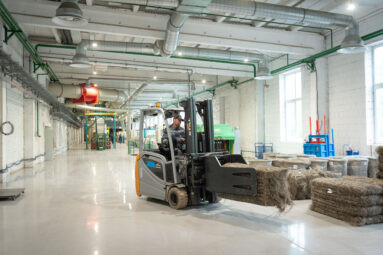
“Ma’Ryzhany”
About 40 million euros have already been invested in this project. One plant is operating in the Zhytomyr region, and a second is under construction in Transcarpathia. When both plants are operating at full capacity, their demand for peas will be about one million tons. This is almost double the current production volume of peas in Ukraine.
In fact, these enterprises are creating a new market for farmers. For now, part of the raw materials will likely have to be imported, but for Ukrainian farmers, this is a strong signal. Stable demand for a niche crop is emerging, and this is another example of how, through industrial parks and other support tools, industry is creating demand in agriculture.
I am convinced that such projects will gradually change the structure of agricultural production. They create new niches, increase the complexity of the economy, and gradually form the very added value we talk about at the strategic level.
Let’s focus on the support tools that, in fact, allow such projects to be launched. Industrial parks today sound like one of the key mechanisms. What do they actually offer businesses, and why has this format proven to be so in demand right now?
To put it very simply, an industrial park can be compared to an office center, but for industrial enterprises. It is a specially prepared land plot for industrial use, to which basic infrastructure has already been brought at the expense of the state, community, or private investor. This includes roads, electricity, gas, water, sewage – everything necessary to launch production.
Industrial buildings can be constructed on this territory, or existing premises can be used. Some industrial parks have available space that can be immediately leased or purchased. And, importantly, tax and customs incentives operate within the park’s territory, making the launch of production slightly more profitable from a project economics perspective.
In fact, industrial parks solve several painful issues for the investor at once. First, it’s land. It already has industrial designation, a cadastral number, and plots of the required size have been formed.
Second, it’s connection to networks. In Ukraine, this is traditionally a complex, long, and expensive process. An industrial park offers ready-made infrastructure. There are parks that even have specialized treatment facilities, which is particularly important, for example, for food production. There is such an example in Ternopil, the Western Ukrainian Industrial Hub, where this infrastructure is already in place.
The third element is buildings. This is especially relevant for small and medium-sized businesses that want to engage in production, not in building workshops. In industrial parks, you can rent premises of the required area and configuration. These can be both renovated industrial buildings from the Soviet period and modern, energy-efficient objects with the necessary ceiling height, overhead cranes, and other technical parameters.
Fourth, it’s project economics. Tax and customs incentives are not extraordinary, but they matter to an entrepreneur who counts every hryvnia. They make starting production a bit simpler and more predictable.
And the fifth point, which is gaining weight now, is service. The management companies of industrial parks have learned to provide additional services to participants. They help with staff selection, financing structuring, preparing documents for government programs, and take on administrative and economic issues. I spoke with the head of a German manufacturing company, and he said something very simple: I don’t want to think about snow removal or whether the utility service will reach me. I want to focus on production. If an industrial park allows this, it’s a good solution.
As of today, there are over a hundred industrial parks in Ukraine’s registry. However, we focus on the so-called active ones, where infrastructure is already being built or is built, or where production is already operating. There are about thirty such active parks.
By the end of last year, 37 factories had already been built or were under construction in these parks. The vast majority of them appeared precisely during the full-scale war. This, in my opinion, is an important indicator that industrial parks have truly started working as a mechanism for attracting investment, despite the war, shelling, and general uncertainty.
This is the result of several years of work on legislation and financial instruments. For two consecutive years, the state has been co-financing industrial infrastructure in industrial parks on a 50/50 basis. The management company or initiator of the park’s creation can receive up to UAH 150 million from the state for infrastructure development.
For the state, this is a beneficial investment. One hryvnia of budget funds effectively obliges the applicant to attract at least five or six hryvnias of private investment. Over two years, the state has invested about UAH 1.9 billion in the industrial infrastructure of industrial parks. And the 37 factories we are talking about are a direct result of this policy.
A significant portion of these enterprises operate in agricultural processing, food production, wood processing, and biomaterials. We see good dynamics and hope that they will continue.
If we look ahead, what industrial parks or projects do you already consider successful or under active development today? What can we hear about in the near future, say in 2026, especially in the context of agricultural processing and related industries?
Of course, the war leaves its mark. Industrial parks, like all industries in Ukraine, are suffering destruction, and many investors act very cautiously. But, despite this, we see good dynamics. I can name several examples of parks that have already proven their viability.
One such example is the “Bila Tserkva” industrial park. It is actually fully occupied, and the owners are already developing a second park nearby. This is an illustrative story where demand exceeds initial plans, and businesses are ready to scale up.
Another strong example is the Western Ukrainian Industrial Hub in Ternopil region. They started with an area of about 10 hectares. When there was not enough space, they annexed neighboring plots, and now the total area exceeds 40 hectares. There is stable demand for both land and finished premises. The park has a clear specialization related to agricultural processing. It houses oil and sauce production facilities, several meat processing enterprises, as well as related industries. This is a good example of organic development, where an ecosystem forms around one direction.
I consider the “Ma’Ryzhany” industrial park in Zhytomyr region, specializing in industrial hemp processing, to be very promising. We have already discussed it. This is an example of how narrow specialization can become a growth point for the region.
There are also large projects where industrial parks are used as a tool for large-scale production. For example, the company “Epicenter” used this mechanism to build several production facilities at once in one of the industrial parks. This is a notable project with a focus, in particular, on agricultural processing. Even if some of the production facilities are not strictly agricultural, they are very close to this segment in terms of business logic.
Another example is “Kronospan” in Rivne region. This is a large Austrian wood processing enterprise around which an industrial park has been created. The idea is to form a furniture cluster. Furniture manufacturers are to be located near the plant that produces boards, including OSB. They will be able to take boards directly from the plant, saving on logistics and increasing efficiency. This is then followed by the export of finished furniture. This is a very logical model where added value remains within the country.
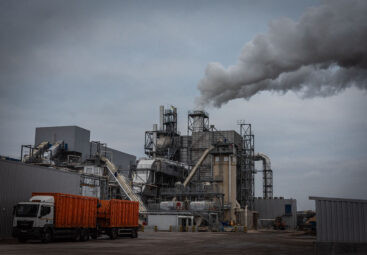
Kronospan
All these examples have one thing in common. They have already happened or are in the phase of active development. They have something to offer investors, and they demonstrate real investment activity. And, importantly for our conversation, most of them are somehow related to agricultural processing or adjacent industries.
You talk a lot about supporting small and medium-sized businesses. What about interaction with large players? Do they use the same tools, or do separate mechanisms work for them when it comes to launching high added value production?
If we talk about the “Made in Ukraine” policy, most programs are indeed aimed at small and medium-sized businesses. I am not claiming it is an ideal model, but that is how it has historically evolved. However, there are several mechanisms that work well for large businesses too, they just have a different logic.
For large projects, the key tool is support for projects with significant investments, what are often called “investment nannies.” Of the four large investment projects that have already benefited from this mechanism, two are in agricultural processing. The first such agreement was concluded with “Astarta” company for the construction of a deep soybean processing plant. The total investment volume is $76 million. The second project is a plant by Efi Group for the production of high-protein feed additives and animal fats in the Cherkasy region. Investments in this enterprise are expected at the level of 20 million euros. At the end of last year, they laid the first stone, and the project is gradually developing.
This mechanism works for projects from 12 million euros. Through various forms of state support, up to 30 percent of capital investments can be compensated. It is already in effect, it can be used, and importantly, several large companies have gone through this path first. Now both businesses and the state understand well how it works in practice.
There is another interesting aspect that seems fundamental to me. Large holdings have begun to demonstrate a preference for Ukrainian equipment. Recently, we presented the catalog “Ukrainian Equipment for Agricultural Processing,” which includes some domestic manufacturers. And it was very important for us to hear, for example, from MHP that they not only buy Ukrainian equipment but are ready to talk about it publicly and thus provide a reference for equipment manufacturers.
There is no romance here; it is a pragmatic choice. The equipment is competitive in price, it is of high quality, and the service is nearby. But it is important for someone to say this out loud, because we still have a sense of inferiority, as if imported is automatically better, and domestic raises doubts. When large companies demonstrate with their example that Ukrainian equipment works efficiently, it is a strong signal to the market.
Industrial parks are also actively used by large players. I have already mentioned Epicenter, which used this mechanism for its large production complex. For them, it was a convenient and effective solution in terms of production organization.
If we talk about foreign investors, there is interest. And here, not so much the words are important, but the examples. Nestle launched a new noodle production factory in Volyn last year with investments of about 40 million euros. This is a full cycle using Ukrainian raw materials, Ukrainian flour, oil, some spices, with Ukrainian packaging, and oriented towards export. A good example that investing during wartime is possible.
Or the Austrian company Kronospan, which further invested about 200 million euros in one of its plants during the full-scale war. There are also examples of Ukrainian investors – Agroprodservice, which founded the aforementioned Western Ukrainian Industrial Hub, or OKKO, which is building a bioethanol plant. Or Vitagro. They are investing in processing right now.
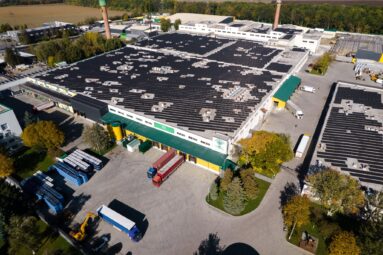
Western Ukrainian Industrial Hub
For foreigners, this is a very important signal. When they see that local large companies are not fleeing but building, and at the same time international players are not stopping investments, it builds trust. Yes, many are waiting for peace and the end of hostilities. But the fact that such projects are being implemented right now, despite the war, fuels the interest of those who are simply looking for the right moment. And our position is simple: whoever enters first will have more opportunities.
In conclusion, I would like to discuss the legislative agenda for 2026-2027. What initiatives are key for you now in terms of strengthening industrial policy and creating conditions for investment, particularly in processing? What exactly should yield the result you have been talking about throughout the conversation?
Frankly speaking, I am not ready to announce any specific agrarian-specific initiatives right now. The head of the agrarian committee, Oleksandr Haidu, will talk more about this. But there is one extremely important initiative that directly affects both agricultural processing and industry as a whole.
This concerns a package of draft laws on compensating capital investments through taxes. This is a very important mechanism that has been working effectively for a long time in European Union countries. We see how European states, through such instruments, are luring Ukrainian entrepreneurs who are considering relocating their businesses due to the war.
The essence of the mechanism is quite simple. When you build a factory, launch production, start operating, and pay taxes, you get the opportunity to compensate for part of the invested capital investments from the taxes that the enterprise generates in its economic activities. There is a corresponding European directive that clearly defines how this instrument works, and it has proven its effectiveness in EU countries.
We decided that it is hard to imagine a better format for European integration than implementing such a mechanism. Therefore, we studied the European experience, essentially adapted the directive to Ukrainian realities, and registered two draft laws, No. 13414 and No. 13415. They introduce the mechanism of compensating capital investments through taxes in Ukraine.
This package has already been voted on in the first reading and is now being prepared for the second reading in the tax committee. As is often the case with important economic initiatives, we are in discussions with the IMF. This is not an easy process, but such matters always require discussion. I am convinced that we will find common ground.
My position is simple. These draft laws should be adopted this year, and the mechanism itself should start working from next year. This will be a very strong signal for investors. They will see that the state is not just calling for investment but is ready to share some of the risks with businesses and provide long-term support for projects that create production, jobs, and added value in Ukraine.