

The escalation of the conflict around Iran and attacks on merchant vessels in the Strait of Hormuz have already begun to affect global markets. Primarily, this impacts oil, logistics, and freight, and subsequently, grain. For Ukrainian agrarians, this signifies a new period of uncertainty on the eve of the spring sowing campaign: expenses may increase now, while grain prices might react significantly later.
When Global Prices Rise, But the Farmer Doesn’t Feel It
NB: At first glance, the news from the exchanges is positive: global prices for grains and oilseeds are showing an upward trend. However, in practice, this growth has so far barely reached the producer.
As Bohdan Kostetskyi, an analyst of the grain market and partner and commercial director of Barva Invest company, explains, a significant portion of this movement is simply “eaten up” by logistics.

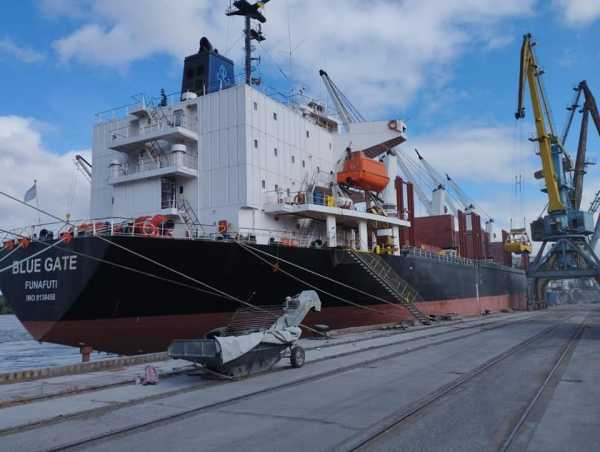
— We are indeed seeing global prices for grains and oilseeds rise. But this increase is currently largely driven by the rising cost of freight, — he says. — Over the past week, shipping rates have increased significantly. For example, the rate for sea transport of grain to the ports of the Marmara Sea in Turkey has increased from approximately $23 to $26 per ton.
Even more sharply, Bohdan Kostetskyi notes, has the cost of transportation by small sea vessels, used for short regional voyages in the Black Sea, increased. If previously delivering oilseed meal to the Georgian port of Poti cost about $35–36 per ton, now we are talking about $50 per ton. In effect, logistics added about $15 per ton in just one week. Under such conditions, some trade routes become economically unattractive.
Logistics “Eats Up” Profit
For producers, this means that even if global prices rise, a significant portion of this increase does not reach the field.
— As long as buyers are not willing to pay more than what the increased transportation costs dictate, the main pressure falls on the export prices of Ukrainian grain, — explains Bohdan Kostetskyi.
Today, buyers are willing to pay approximately $224/ton FOB for Ukrainian corn. Consequently, domestic purchase prices in Ukraine are formed at about $214 per ton, and trade activity remains quite restrained.
NB: An additional factor of uncertainty has been cases of buyers refusing to fulfill contracts, particularly in the Iranian direction, as well as competition from Turkish sellers who have sufficient grain reserves.
As a result, a significant portion of the market has adopted a wait-and-see approach: farmers are in no hurry to sell, and traders are trying to understand the further development of the situation.
Main Risks for the Sowing Campaign
Will the war in the Persian Gulf affect the spring sowing campaign?
— Regarding the new agricultural season, we have a situation where the cost of production means is increasing with uncertain prospects for finished product prices. The risk for the producer lies in the fact that they are already forced to incur higher expenses due to the war in the Middle East and the blockade of the Strait of Hormuz, through which up to 20% of oil and 20-25% of fertilizers were supplied to global markets, — explains Bohdan Kostetskyi.
The market reacted instantly to this situation — prices for nitrogen-based fertilizers and urea surged, and the 2026 sowing campaign in Ukraine is starting under conditions of nutrient element deficit, the supply of which increasingly depends on imports. Last year, according to the “Institute of Agrarian Economics,” about 3 million tons of fertilizers were imported into Ukraine, but even this is not enough: the deficit of saltpeter alone is estimated at 150–170 thousand tons.
Fuel remains no less important a factor for Ukrainian agrarians. The escalation of the war in the Middle East means its increased cost for European traders and, consequently, for Ukraine.
NB: Analysts warn that if the conflict drags on and global oil supplies decrease, Europe may direct a larger portion of resources to its own needs, which will automatically reduce exports to the Ukrainian market. For agrarians, this means a simple but unpleasant reality: at the height of the spring sowing campaign, diesel fuel will not only become more expensive but may also become less available.
— Fuel prices directly affect the cost of production right now. The problem is that the market can develop according to various scenarios. If the conflict ends quickly and oil prices fall, then grain prices may also decline along with them. Our producer is effectively caught in a bind. They have already invested more money into the land due to this war and rising resource costs, but by the time they sell, prices for grain and oilseeds may decrease, — says the expert.
Inflation May Support Grain Prices
If the conflict in the Persian Gulf continues, the market may begin to factor in another element into prices — inflation.
NB: More expensive energy resources mean more expensive production, transportation, and processing. In the longer term, this can support prices for grain and oilseed crops.
— Global events and the rapid rise and volatility of oil and fertilizer prices will inevitably lead to inflation. Inflation, in turn, will prevent grain prices from falling, — explains Bohdan Kostetskyi.
However, it is important to remember that costs react first: fuel, energy, and logistics.
The Market Is Waiting
For now, the global grain market is in a waiting phase. Exchanges are reacting to geopolitical news, freight rates are increasing, but actual trade remains cautious. For Ukrainian agrarians, this means the need to closely monitor not only the exchanges but also political signals — primarily what is happening around the Strait of Hormuz.
The further dynamics of grain prices will depend on how long this conflict lasts and how quickly global logistics return to normal operations.
Halyna SHEPEL